

Art Guides · Character Design & Animation · Beehaya Studio
What Is Rubber Hose Animation Style? Its Amazing History
Picture a coffee cup in white gloves, dancing on a café counter with arms that bend like cooked spaghetti. In fact, you have just imagined the rubber hose animation style. It is a century old, it was supposedly “out of fashion” by 1940, and yet it now sells burgers, powers indie games and sits on Netflix. So here is where it came from, how it works, where it shines and where it falls flat.

Key takeaways
- First, rubber hose limbs are smooth, jointless tubes; the real signature is bouncy elasticity, not gloves or pie-cut eyes.
- Second, Bill Nolan and Otto Messmer (Felix the Cat), Ub Iwerks and the Fleischers shaped the style in the 1920s and early 1930s.
- It faded because it struggles with subtle acting, not because it failed.
- Then Cuphead (2017) and a wave of indie games and food brands brought it back.
- Finally, it suits comedy, mascots and games, but it is risky for banks, medical services and realistic drama.
What is rubber hose animation?
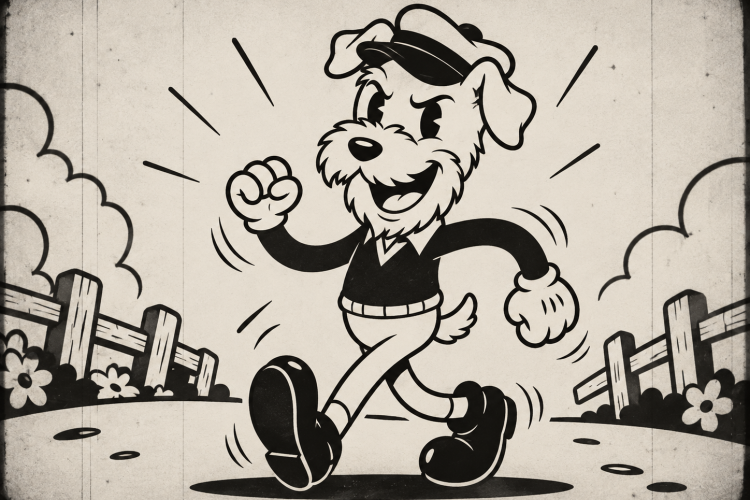
Rubber hose animation is a 2D cartoon style where arms and legs are drawn as smooth, curved tubes with no visible elbows or knees. Limbs loop, whip and wobble to the beat of the music, so the whole body squashes and stretches as if it had no bones. In fact, the name says it all: the limbs look like garden hoses.
However, cartoon historian Vincent Alexander of Cartoon Brew puts the emphasis in the right place. Pie-cut eyes, white gloves and two-button shorts are handy visual shorthand, but the real signature is bouncy elasticity. So if a character moves like a rubber band, it belongs to the family, even without gloves.
A short history: from Felix the Cat to the Fleischer brothers
There was no single inventor, but one name keeps coming up. Bill Nolan is usually credited with introducing the look in the 1920s, when he redrew Felix the Cat with a rounder, softer body. Also, his colleague Otto Messmer, Felix’s creator, was just as influential. Indeed, animator John Kricfalusi (Ren & Stimpy) once called Felix “the father of cartoony cartoons.”

The style spread because it was practical. Simple tubes were quick to draw, while studios in the 1920s were short on trained animators. Ub Iwerks at Disney and Bill Nolan in New York were refining the same ideas even though, according to Animation Resources, the two never met. In fact, Iwerks used to go see Nolan’s Felix films in theaters.

How sound changed the style
Then sound arrived and the style found its rhythm. As a result, characters bobbed to the soundtrack, and any body part could turn into an instrument. However, nobody did this wilder than Max and Dave Fleischer’s studio in New York, home of Betty Boop and early Popeye. For example, Dave Fleischer’s rule, as Cartoon Brew tells it, was that every shot needed a gag. He would flip through an animator’s drawings and ask: “Where’s the gag?”
Moreover, the style even crossed the Pacific. Cartoon Brew also notes that Osamu Tezuka, the “God of Manga,” drew inspiration from early Mickey Mouse and Betty Boop, which fed into the big-eyed look we now associate with anime.
- 1920s Bill Nolan and Otto Messmer round out Felix the Cat.
- 1928–1933 Sound arrives; Disney, Iwerks and the Fleischers push the style to its wildest.
- Mid-1930s–1940 Disney moves toward realism; the Fleischers follow by 1940.
- 2010s–today Cuphead, Disney shorts and indie games bring it back.
Why did it fade?
However, by the mid-1930s Disney was chasing more believable movement and emotional storytelling. The Fleischers held out longest and finally adopted the newer style around 1940. Still, rubber hose did not “fail.” It simply could not do everything. As Wikipedia’s overview points out, it is hard to create a subtle acting performance when every limb is wobbling. For instance, try making an audience cry while your hero’s arm ties itself in a bow.
Key features of the rubber hose animation style
| Feature | What it looks like | Why it matters |
|---|---|---|
| Jointless, curved limbs | Arms and legs bend anywhere along their length | Gives instant fluidity and comedic exaggeration |
| Round construction | Circles and ovals for heads, bodies, hands | Easy to draw, easy to read, friendly feel |
| Pie-cut eyes | Black eyes with a wedge-shaped highlight | Quick way to show where a character is looking |
| White gloves and big shoes | Clean, simple hands and feet | Hand poses stay legible even at small sizes |
| Bold outlines | Thick, tapered ink lines | Strong silhouettes, great for logos and stickers |
| Rhythmic motion | Constant bouncing, swaying, dancing | Characters feel alive and in sync with the music |
| Anything can be a character | Cups, burgers, trees, instruments | Perfect for mascots |
However, not every rubber hose character has every trait. Instead, think of these as ingredients, not a strict recipe.
Classic cartoons worth watching
First, skip the lectures and just watch. So here are good starting points, chosen from Cartoon Brew’s survey of the era and Disney’s own early work:
- Steamboat Willie (1928): the famous debut of Mickey Mouse, with Iwerks’ elastic animation, shown with perfect timing to the music.
- The Skeleton Dance (1929): dancing skeletons. Cuphead co-creator Chad Moldenhauer has said it has been in his mind since childhood.
- Swing You Sinners! (1930): a Fleischer nightmare starring a scatting chicken. In fact, it proves that these cartoons could be properly creepy.
- Bimbo’s Initiation (1931): Cartoon Brew calls it arguably the pinnacle of the style, with a cult of oddballs and some impressive moving perspective shots.
- Betty Boop: Snow White (1933): animated almost entirely by Roland Crandall, with a soundtrack by jazz legend Cab Calloway.
- Spooks (1930): an Oswald the Lucky Rabbit parody of The Phantom of the Opera with Nolan’s loopy animation.

Quick exercise: watch one of these with the sound off and follow only the wrists and feet. Then you will start to see arcs and timing patterns that no tutorial can explain as well.
The modern comeback: new games, shows and shorts
Wikipedia notes that interest in the style has been growing since the early 2010s. So these are the projects that kept it alive:
The big names
- Mickey Mouse shorts (2013 onward): Disney’s TV series revived rubbery slapstick using Toon Boom and Flash-style tools, while the 3D short Get a Horse! (2013) blended old black-and-white gags with modern animation.
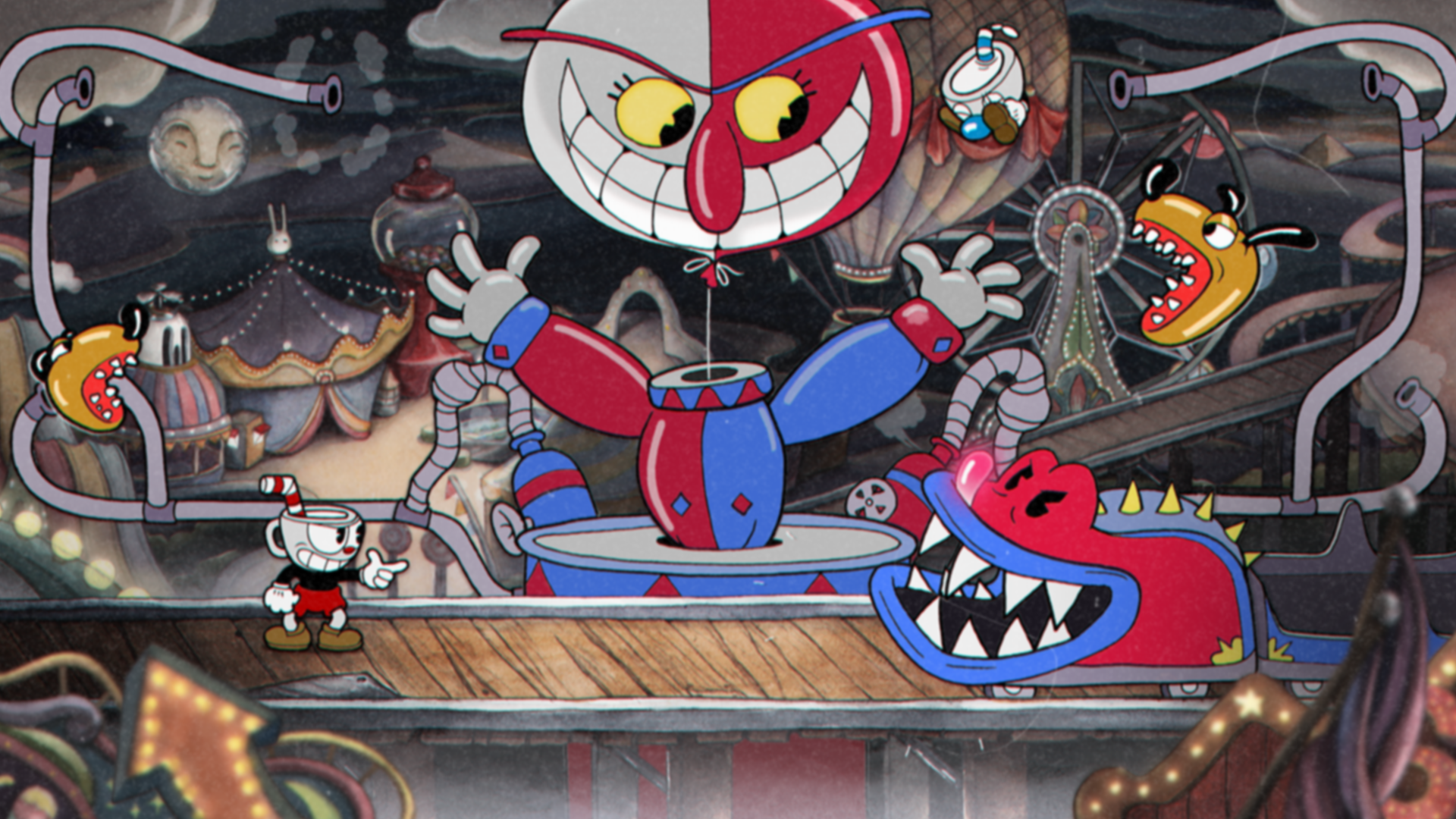
- Cuphead (2017): the game that made rubber hose cool again. The Moldenhauer brothers told Game Developer that after testing several storybook and cartoon looks, they “kept coming back to the rubber-hose animation of the 30’s.” Each frame was drawn and inked by hand, so the game took years to finish.
- The Cuphead Show! (2022): the Netflix series that carried the look to a new audience. However, it uses a digital cut-out pipeline combined with hand-drawn elements, according to Animation Magazine.
- Bendy and the Ink Machine (2017): an indie horror game that turns vintage cartoon charm into something unsettling.
Newer arrivals (2024–2026)
- Steamboat Willie goes public domain (January 1, 2024): the 1928 short’s version of Mickey entered the public domain, and horror films such as Mickey’s Mouse Trap and Screamboat followed. Reviews were mixed at best, but they show how much attention that old black-and-white look still attracts. However, only the early version of the character is free to use, not modern Mickey.
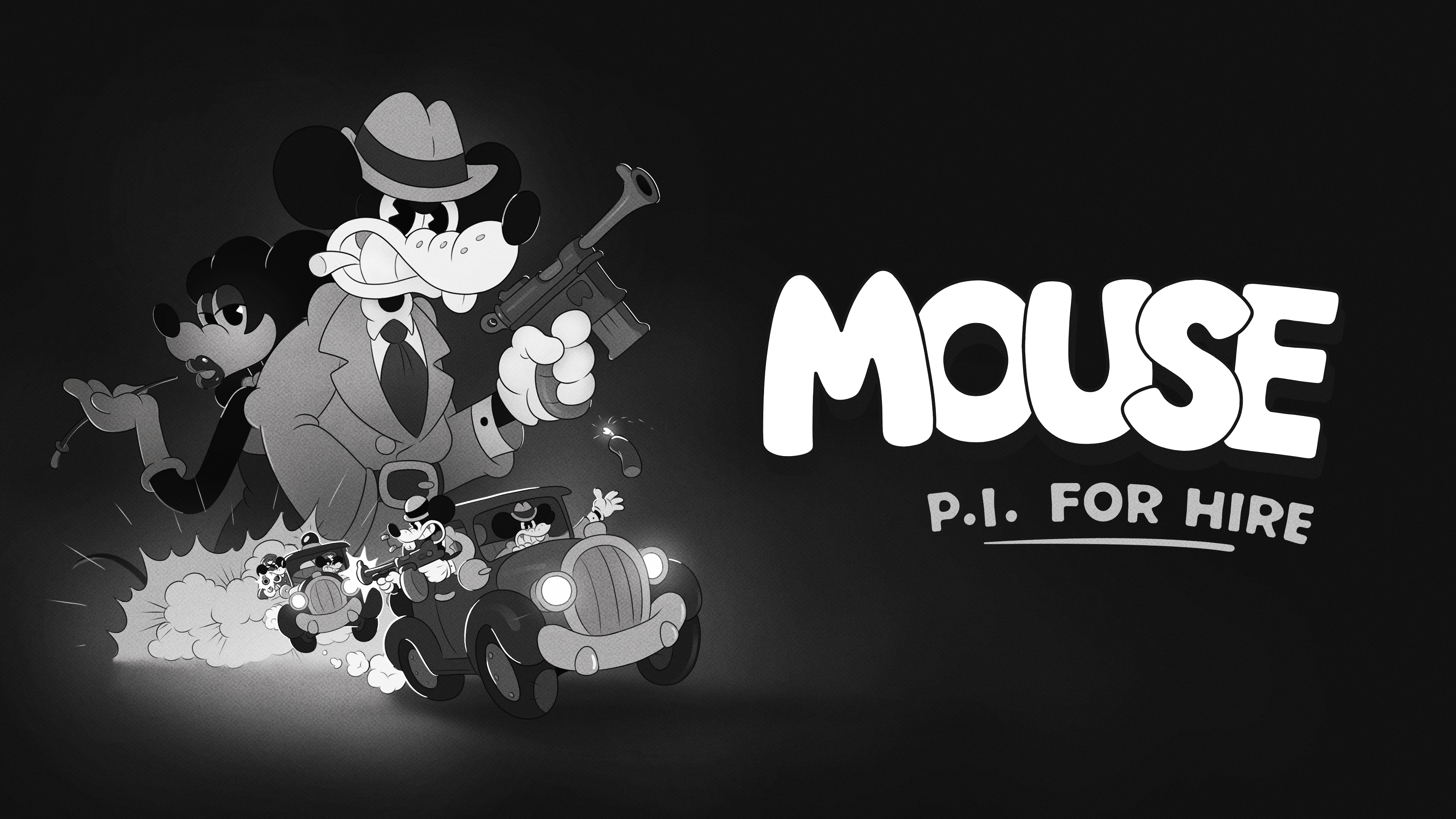
- MOUSE: P.I. For Hire (released April 16, 2026): a first-person shooter with hand-drawn black-and-white rubber hose visuals and a big-band jazz soundtrack, per its Steam page.
- Kalit and Into the Unwell: Creative Bloq argued in 2025 that rubber hose was becoming a real game-design trend. For example, Kalit is a survival adventure in classic black-and-white, while Into the Unwell is a co-op action roguelite with a grotesque 1930s look. Because release details can change, check their store pages for current release status.
However, not all of these are “pure” rubber hose. Some borrow the full toolkit, others just the attitude. That is fine, because the style has always been more about energy than about rules.
Logos, mascots and branding: who actually uses it?
Let’s be honest, because a lot of articles blur this. First, there are very few globally famous corporate logos drawn in strict rubber hose style. Instead, what we have are two different things.
1. Heritage characters. Mickey Mouse (in his Steamboat Willie era), Felix the Cat, Betty Boop and Popeye are all products of this period. They are protected characters and trademarks, so they are inspiration, not free clip art.
2. A modern branding wave. Meanwhile, in March 2026 nss magazine traced a boom in illustrated, mascot-driven food brands straight back to rubber hose. For example, it names the burger-in-a-cap logo of Chuck’s (expanded from New York to London, Milan, Paris and Rome), the cartoon devil of FONZO’S NYC and the panther mascot of the Italian pizzeria Pantera. In addition, the article suggests part of the appeal is a reaction against the flat, bland “Corporate Memphis” illustration style, and a way to signal craftsmanship and a youthful, independent attitude.

Finally, the same article raises the uncomfortable question: if everyone uses the same big eyes and bendy limbs, do brands start to look alike? Our view is yes, but only if you copy the surface. Instead, the brands that win give the mascot a story, a personality and a point of view.
Pros and cons of rubber hose style
Pros
- Instantly recognizable, nostalgic charm
- Simple shapes that read well, even tiny
- Natural fit for visual gags and exaggeration
- Easy to extend to mascots, stickers and merchandise
- Works in black and white or limited color
- Any object can become a character
Cons
- Easy to look generic if you copy the trend
- Poor fit for subtle, realistic acting
- Consistency is tricky when limbs bend a lot
- Great motion needs real skill in timing and spacing
- May clash with very formal brand positioning
- Heritage characters carry copyright and trademark risks
Where you can use it, and where you probably shouldn’t
| Use case | Fit | Why |
|---|---|---|
| Cafés, restaurants, bakeries, fast food | Excellent | Food and drinks make charming characters; ideal for cups, bags and signage |
| Indie games and short animations | Excellent | Strong visual identity, built for physical comedy and boss fights |
| Streetwear, stickers, posters, music artwork | Very good | Bold lines print well, nostalgic appeal |
| Kids’ and edutainment content | Good | Friendly shapes, easy to remember |
| Startups and youth-oriented apps | Good, with care | Adds personality, but make sure it matches the product |
| Banks, law firms, insurers | Risky | The playful tone can undermine a serious promise |
| Medical or sensitive services | Risky | Silly visuals can clash with delicate subjects |
| Realistic drama or emotional storytelling | Poor | Wobbly limbs distract from subtle performances |
Overall, these are rules of thumb, not laws. For example, a young fintech brand with a cheeky mascot could work if the audience gets the joke. A funeral home, however, could not.
Is rubber hose good for making animation?
Short answer: yes, for the right kind of animation. It is great for comedy, music-driven loops, ad mascots and game characters. However, it is a poor tool for naturalistic acting.
What makes it easier
- First, simple, round shapes are fast to draw and redraw.
- Also, there is no need to fuss with realistic joints or anatomy.
- Besides, squash, stretch and bounce hide small imperfections.
- Finally, dedicated tools exist. For example, in After Effects, Battle Axe Rubberhose 3 builds bendy limbs quickly (one-time purchase, supports CC2021 and newer). In addition, Adobe Animate and Toon Boom Harmony are classic choices for frame-by-frame work.

What makes it harder
- Smooth loops, arcs and overlapping action still demand serious timing skills. After all, a simple model is not the same as simple animation.
- Keeping the drawing consistent while limbs twist is a real challenge.
- Besides, the authentic hand-inked route is costly. Cuphead proves it can be done, but at the price of years of work. An academic paper from Malaysia’s Universiti Teknologi MARA also mentions budget and time as reasons some local studios avoid it.
Practical tip: make the limbs bendy, but keep the body’s center of gravity believable. Audiences forgive rubber arms, but they do not forgive a character that floats.
Books to read next
Six essential books on rubber hose and early animation
- Hollywood Cartoons: American Animation in Its Golden Age — Michael Barrier. Widely seen as a standard history of American animation, with coverage of Fleischer, Disney and Warner Bros. in the early sound era.
- Before Mickey: The Animated Film 1898–1928 — Donald Crafton. The deep dive into everything that led up to the rubber hose boom.
- Felix: The Twisted Tale of the World’s Most Famous Cat — John Canemaker. The story behind the character who started the trend. Might be out of print, so check libraries.
- Out of the Inkwell: Max Fleischer and the Animation Revolution — Richard Fleischer. A portrait of Max Fleischer, written by his son.
- The Art and Inventions of Max Fleischer — Ray Pointer. A look at the technical creativity behind the Fleischer studio.
- The Illusion of Life: Disney Animation — Frank Thomas & Ollie Johnston. Not about rubber hose, but it explains the principles (squash, stretch, timing) you need to animate it well.

Further reading
Finally, the BFI’s list of 30 essential animation books is a good place for further reading, including Preston Blair’s classic cartoon drawing guide.
Frequently asked questions about rubber hose animation
Who invented rubber hose animation?
Bill Nolan is most often credited, thanks to his 1920s redesign of Felix the Cat. Otto Messmer, Ub Iwerks and the Fleischer brothers also shaped the style.
Why is it called rubber hose?
The limbs bend smoothly like a rubber hose, with no visible joints.
Is Cuphead rubber hose animation?
Yes, because the creators say their goal was to follow the rules of 1930s studios, such as pupil shape, rubber limbs and cycle timing.
Can I use Steamboat Willie in my project?
Only the 1928 version of the character is public domain in the United States, since January 1, 2024. However, later versions of Mickey and Disney trademarks remain protected. So for commercial work, get legal advice or create an original character.
Can AI generate rubber hose characters?
It can help with early ideas, but AI images are usually not clean vector files and may not stay consistent across frames. Treat them as sketches, then redraw.
Final thoughts
Rubber hose has lasted a hundred years because its core idea is timeless: a drawing that bends, bounces and grins feels alive. So study the originals, borrow the energy rather than the clichés, and give your character something to say. If you do, then your coffee cup in white gloves might just become someone’s favorite mascot.
Looking for original cartoon and character artwork? Then explore Beehaya Studio’s illustration and character design work.
References
Articles, websites and tools
- Wikipedia contributors. “Rubber hose animation.” Wikipedia. en.wikipedia.org/wiki/Rubber_hose_animation
- Alexander, Vincent. “The Wild Classics of Rubber Hose Animation That Inspired ‘The Cuphead Show!’” Cartoon Brew, February 22, 2022. cartoonbrew.com
- Guerrini, Luca. “Why illustrated brand identities are so popular in the food sector.” nss magazine, March 28, 2026. nssmag.com
- Animation Resources. Notes on Bill Nolan and Ub Iwerks. animationresources.org
- TV Tropes. “Creator / Otto Messmer” (user-edited wiki; quotation attributed to John Kricfalusi). tvtropes.org
- Game Developer. “Road to the IGF: Studio MDHR’s Cuphead.” gamedeveloper.com
- Animation Magazine. “Creating a Rubber Hose Wonderland for ‘The Cuphead Show!’” March 2022 (No. 318). animationmagazine.net
- Creative Bloq. “Zany video games that look like 1930s Mickey Mouse are bucking the trend for photorealism.” June 12, 2025. creativebloq.com
- Steam. “MOUSE: P.I. For Hire” (Fumi Games / PlaySide, released April 16, 2026). store.steampowered.com
- GamesRadar+. “Upcoming indie games for 2026 and beyond.” gamesradar.com
- Associated Press. “First Pooh, now Mickey. In public domain, early Mickey Mouse version will star in horror movies.” January 2, 2024. fortune.com
- Toolfarm. “Battle Axe Rubberhose 3.” toolfarm.com
- BFI. “30 essential books about animation.” bfi.org.uk
- Muharam, N. & Sidli, N. A. R. “Rubber Hose Animation: The Exploration towards the History and Understanding of Animation Industry.” Universiti Teknologi MARA. hrmars.com
Books and academic papers
- Barrier, Michael. Hollywood Cartoons: American Animation in Its Golden Age. Oxford University Press, 1999.
- Crafton, Donald. Before Mickey: The Animated Film 1898–1928. 1982; repr. University of Chicago Press, 1993.
- Canemaker, John. Felix: The Twisted Tale of the World’s Most Famous Cat.
- Fleischer, Richard. Out of the Inkwell: Max Fleischer and the Animation Revolution.
- Pointer, Ray. The Art and Inventions of Max Fleischer. 2017.
- Thomas, Frank & Johnston, Ollie. The Illusion of Life: Disney Animation.
Rights and usage notice
Rights notice: Facts, dates and short quotations above are credited to the sources listed. Quotes are also limited to a few words each. Character names (Mickey Mouse, Felix the Cat, Betty Boop, Popeye, Cuphead and others) and logos belong to their respective owners and are mentioned for editorial purposes only. Historical image sources are linked through Wikimedia Commons, so check each file page and local reuse requirements before publication. However, only the 1928 Steamboat Willie version of Mickey is in the US public domain, and trademark rules may still apply. Also, release details for games and shows may change after publication.
Author: Beehaya Studio editorial team · Art Guides. Platform names and trademarks belong to their respective owners.